The aircraft
Built around a giant of an engine.
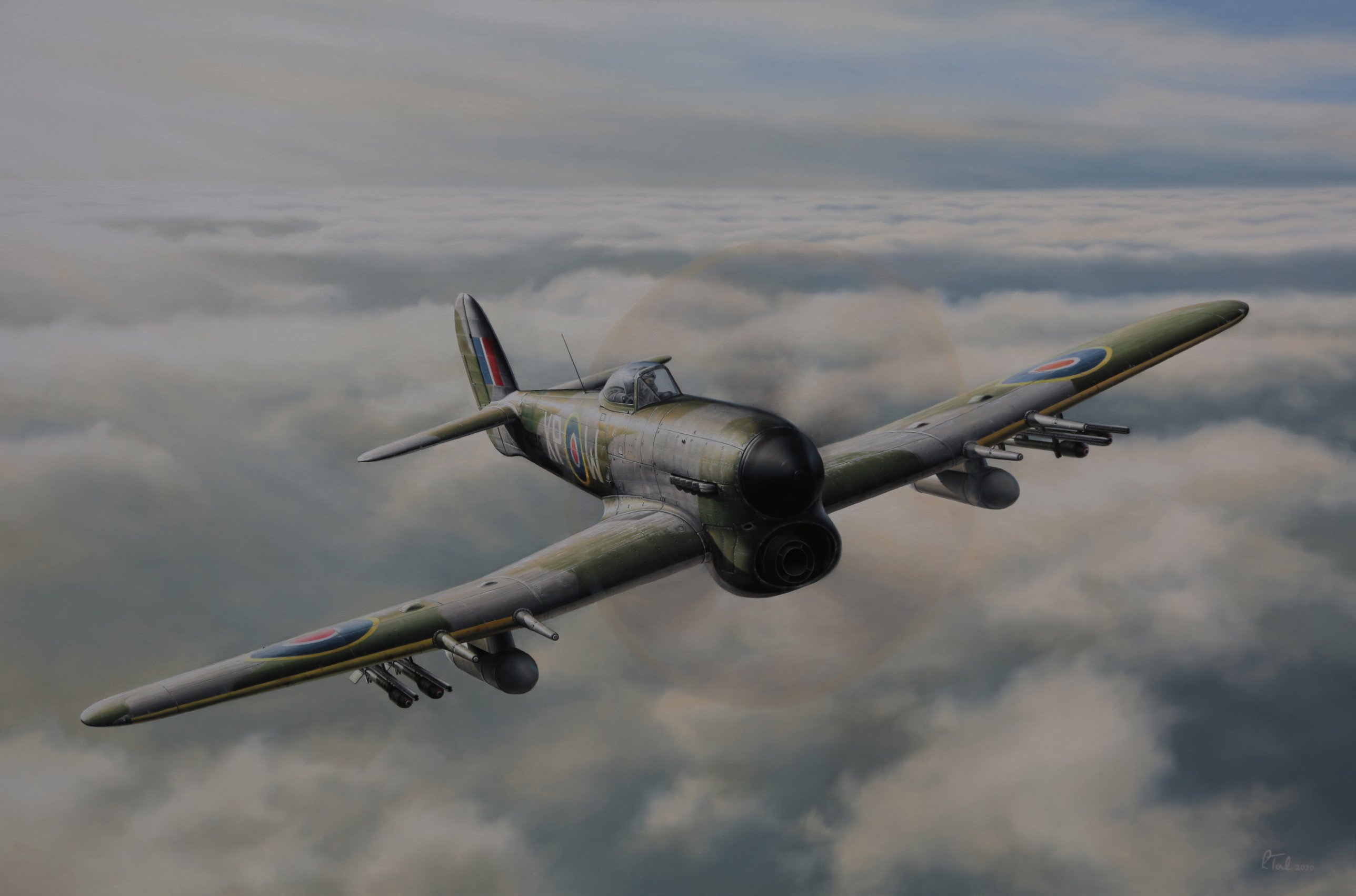
Designed by Sydney Camm, the man behind the Hurricane, the Typhoon was built around the Napier Sabre: a 24-cylinder engine producing more than 2,000 horsepower. It struggled as a high-altitude fighter, but low down it was fast and heavily armed.
From 1944 Typhoon squadrons supported the Allied armies across Normandy and into Germany, attacking with cannon, rockets and bombs. It was dangerous work, and many pilots did not come home.
Typhoon Mk Ib at a glance
- Role
- Fighter-bomber and ground-attack aircraft
- Designer
- Sydney Camm, Hawker Aircraft
- Built
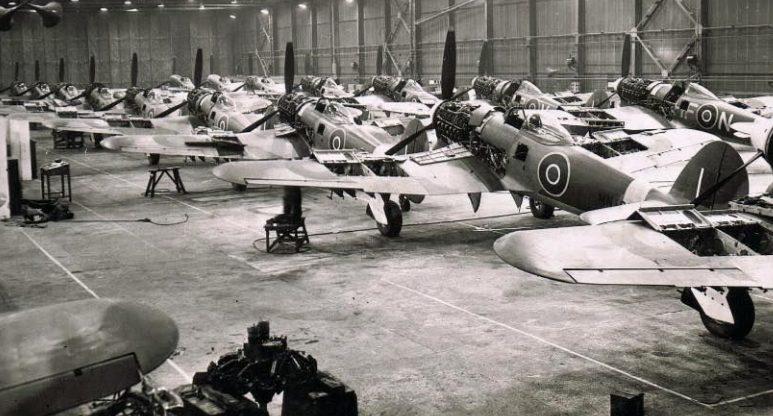
- 3,317, almost all by Gloster at Hucclecote, Gloucester
- Engine
- Napier Sabre IIA, 24-cylinder H-type, 2,180 hp
- Top speed
- 405 mph at 18,000 ft
- Wingspan
- 41 ft 7 in
- Length
- 31 ft 11 in
- Armament
- Four 20 mm Hispano cannon; up to eight 60 lb rockets or two 1,000 lb bombs
- Crew
- One pilot
The Typhoon at war
From troubled fighter to tank-buster.
- 1937 Design begins Sydney Camm’s team at Hawker starts work on a fighter to succeed the Hurricane, built around a new 24-cylinder engine.
- 1940 First flight The first prototype flies in February 1940. [Confirm date]
- 1941 Into service The Typhoon joins the RAF. Early aircraft suffer engine and tail failures, and its reputation is poor.
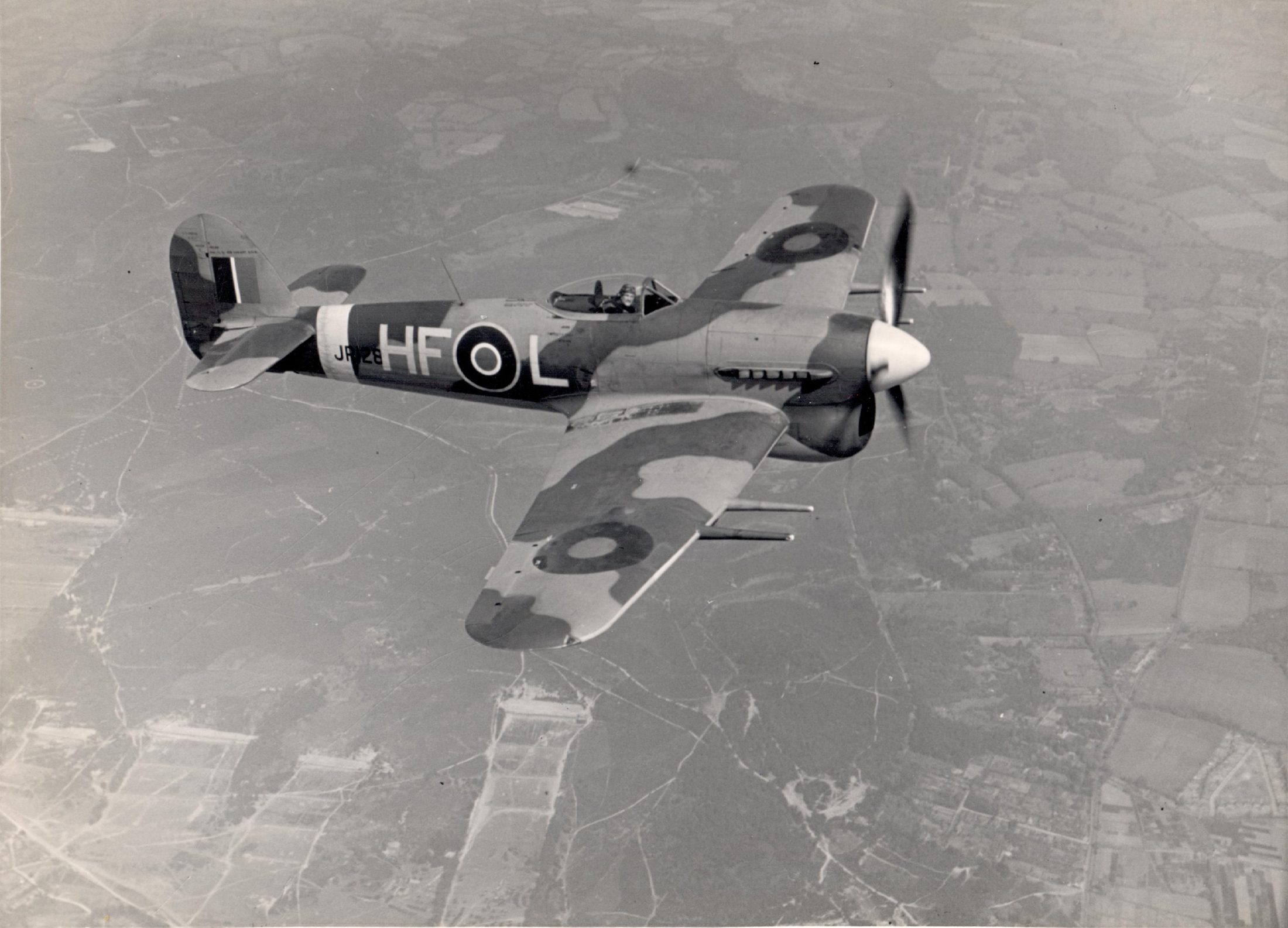
- 1942 to 1943 Finding its role Too heavy for high-altitude combat, it proves fast and rugged at low level: first catching raiders over the coast, then attacking targets across the Channel.
- 1943 Bombs and rockets Armed with bombs and RP-3 rockets, the Typhoon becomes a ground-attack aircraft. Pilots call the bomb-carrying version the ‘Bombphoon’.
- June 1944 D-Day Typhoon squadrons of the 2nd Tactical Air Force fly close support over the Normandy beaches and beyond.
- 1944 to 1945 Across Europe Operating from rough forward airfields, Typhoons follow the armies through France, the Low Countries and into Germany.
- 1945 The end of the war Production ends at 3,317 aircraft and the Typhoon is retired soon after the war. Today one complete example survives, and none fly.
The people
Those who served.
There is still no national memorial to the people of the Typhoon. RB396 will be one that flies. These are some of their stories.
-
Aircrew
Young pilots, many from Canada, Australia, New Zealand and occupied Europe, flying low through some of the heaviest flak of the war.
-
Ground crews
The ‘Erks’ who rearmed, refuelled and repaired the Typhoons overnight at forward airfields, often under canvas and within range of enemy guns.
-
Factory workers
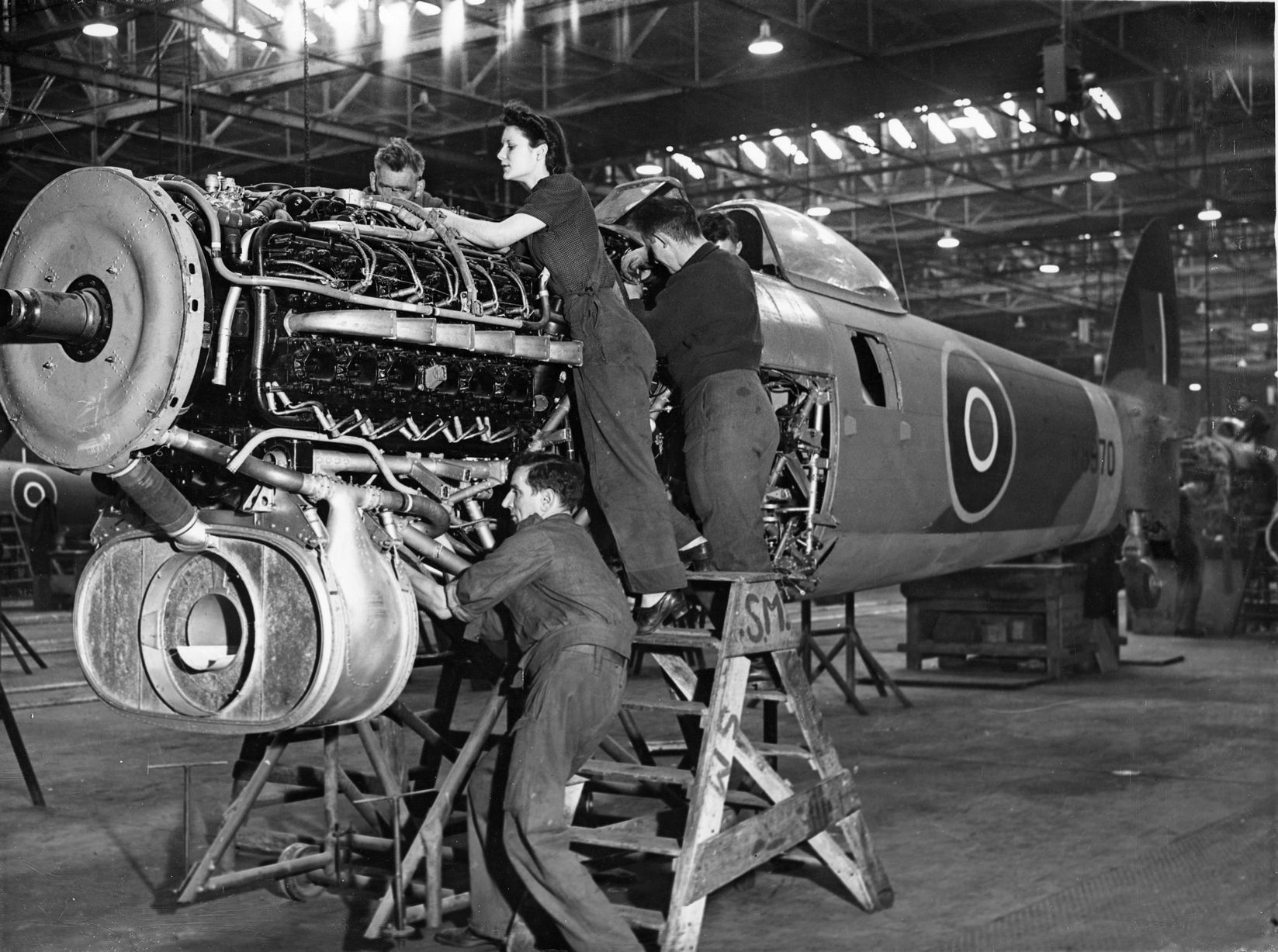
The men and women at Gloster Aircraft and Hawker who built the Typhoon. Most of the 3,317 were built by Gloster.
Did a member of your family fly, fix or build the Typhoon? We would love to hear their story.
Share a family storyWhy it matters
One survives. None fly.
Of 3,317 Typhoons, only one complete example survives: MN235, on static display at the RAF Museum. No Typhoon has flown since the type was retired. When RB396 flies, she will be the only one in the world.